#119 Eliminating Silica and Other Construction Risks using Cast-in Ferrule Systems
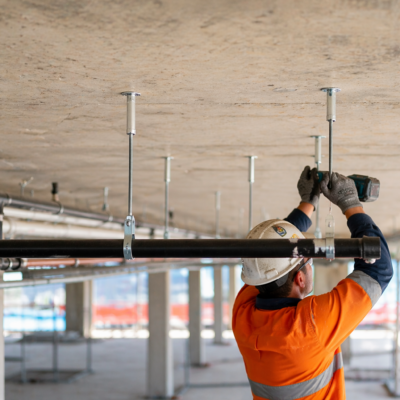
Respirable crystalline silica (RCS) exposure is a significant work health and safety challenge in construction, particularly during overhead drilling into hardened concrete when installing mechanical, electrical and plumbing (MEP) services beneath slabs. As well as RCS exposure, workers are also exposed to falling debris, eye injuries, manual handling strain, fatigue and work-at-height risks. These hazards are compounded by the repetitive nature of the task and the extended duration of overhead drilling on major projects.
This project investigates how cast-in ferrule systems can be more consistently adopted to eliminate these risks at source. Cast-in ferrules provide a practical, design-led alternative, by installing threaded anchorage points during the concrete formwork stage, removing the need for post-pour drilling.
While this approach is well established in precast construction, its adoption in cast-in-situ concrete construction remains limited. The project focuses on identifying key barriers, mapping practical workflow integration, and developing guidance on coordination, tolerance and assurance requirements to support safer-by-design construction and improved productivity.
Project team: A/Prof. Xuemei Liu, Bryon Price, Luke Snell
Lead researcher

People, Practices and Culture
Construction Safety and Wellbeing
Theme coordinator

Dr Carol Hon
Projects
#119 Eliminating Silica and Other Construction Risks using Cast-in Ferrule Systems
#120 Modern Methods of Construction Microcredentials
#111 VET Qualifications System and Training Framework for Modern Methods of Construction
#102 Skills and training implications of modern methods of construction: Across design, manufacture and assembly
Light House Project #13: Mixed Reality Carpentry Demonstration
Policy and Regulation
Theme coordinator

Dr Eric Windholz
Projects
#119 Eliminating Silica and Other Construction Risks using Cast-in Ferrule Systems
#109 Evaluating the Effectiveness of a Digital Traceability Pilot
#123 Ready-to-Use Fire and Acoustic Certified Solutions for Off-the-Shelf CLT Construction
#118 Featherweight Housing: Unlocking affordable, compliant and rapidly deployable walk-up housing through digital innovation and regulatory reform
#80 Why are insolvencies so high in the Construction industry and what can be done about it?